
Rotation
How many times a year your inventory turns into cash. Low rotation is capital asleep in the warehouse: it doesn't show in the income statement, it shows in the bank account.
Cost of goods sold ÷ average inventory
Before selling you a system we measure three things: how fast your inventory turns, how much one hour of your team produces, and where everything else gets stuck. If your problem can be fixed without software, we tell you and we don't charge you for a system.
Two businesses in the same line of work, in the same city, with the same product and the same price. One bills twice as much as the other. The difference isn't the salesperson: one of them knows, every Monday, what moved, what sat still and what each route is missing. The other finds out when the product has run out or has already spoiled.
Neither of them has a sales problem. One has the information on time and the other chases it by hand, every day, until the whole day is gone chasing it.
That is the cost nobody books: you work fourteen hours, put out the fire of the day, and at month-end the business is exactly where it was last month. It isn't lack of effort. The effort is going into work a machine does better: counting, comparing, alerting, reminding.
~120 h/month Estimate for a 4-person operation that today consolidates inventory and follow-up by hand. It is not a client average: it is the calculation of the workflow that gets automated.
How many times a year your inventory turns into cash. Low rotation is capital asleep in the warehouse: it doesn't show in the income statement, it shows in the bank account.
Cost of goods sold ÷ average inventory
How much one hour of your team produces. If hiring someone else is the only way to sell more, return per hour is your ceiling, not the market.
Monthly sales ÷ person-hours in the month
The point where everything else gets stuck. Improving anything else doesn't move the result: it only piles up work in front of the bottleneck.
The R with the least slack against its threshold
Twelve years applying management systems in the public and private sectors leave an uncomfortable conclusion: almost nobody measures before deciding, and the twenty-person business does it least. The tools to fix that have existed for decades and are documented. They never reached the twenty-person company because they came packaged as a corporate project. That is what we bring.
What we do
Numbers first, proposal second. If the result is that you don't need software, we tell you and it ends there.
(Measure before improving · Plan–Do–Check–Act cycle, Walter Shewhart, Bell Labs, 1939)
Fixing ten minor things doesn't change the result. Every operation has one point where everything else piles up, and that is the one to work on.
(Theory of Constraints · Eliyahu Goldratt, “The Goal”, 1984 — this is our R3)
From the moment an order comes in until it is collected. Automating one stretch without seeing the whole route only moves the problem somewhere else.
(Value stream mapping · Toyota Production System, Taiichi Ohno)
A system the team doesn't use costs more than not having one. We don't stay on as middlemen: the goal is that it runs without us.
The same three measures as at the start, with the same criteria. That shows whether the change worked. And if it didn't, that shows too.
(The cycle that starts over · the ISO 9001:2015 standard is still structured on it)
The six stations
How many hours a month go into gathering information by hand, process by process. If the number turns out low, you don't need software and we tell you in the diagnosis.
A good share of projects fail because nobody wrote down what was going to be done. Here it is recorded what gets built, what explicitly does not, and how we verify it came out right.
(Define before building · Define phase of the DMAIC cycle, Six Sigma)
What runs without anyone pushing it, what stops by itself when something goes wrong, and who gets alerted when that happens.
What gets done first, what connects to what, and how each piece is verified before moving to the next. It is what prevents rework.
With your people, your cases and your data. Training that has to be repeated every month is training that didn't work.
We measure the same things as at the start: what changed, what didn't, and what comes next. From there comes the next project, or the conclusion that none is needed.
(Here the cycle closes and starts over)
These six stations aren't a slide deck: they are built as software, with stage control and progress measured against the real number. We sell what we apply to ourselves.
View interactive portfolio with screenshots →
Healthcare
The electronic health record that actually complies with Mexico's NOM standards.
AI consulting
The operating system for your AI consulting practice.
Manufacturing / Beverages
From the agave batch to the shelf, with auditable traceability.
Healthcare / Diagnostics
Results validated and delivered without paper or phone calls.
Regulatory compliance
Vulnerable activities under control, no surprises from the UIF (Mexico's financial intelligence unit).
Private education
Collections, attendance and cafeteria in a single dashboard.
Hospitality
From booking on the floor plan to closing the day, in a single system.
Tourism
From payment to tour to review, without chasing the customer.
Public communications
Find out what is being said about you before it becomes a crisis.
B2B sales
Your customer builds their own quote and sees the price instantly, with no PDFs going back and forth.
Sales
No lead gets lost between conversations.
Accounting
Your XML invoices from SAT (Mexico's tax authority) without downloading them one by one from the portal.
Restaurants
Cloud point of sale for restaurants.
Care homes
Nursing and administration off paper.
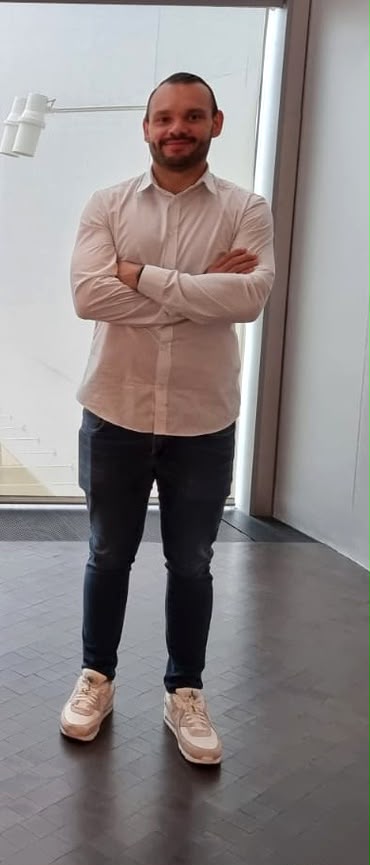
Founder and CEO
For more than twelve years I have worked on implementing and evolving management systems in the public sector (municipal, state and federal) and the private sector: environments where an operation can cross multiple areas, systems and owners before reaching a result.
That experience took me through the whole project cycle: requirements gathering and analysis, project management and coordination, database design and administration, systems implementation and support of applications in production. I have also taken part in more than 30 implementations under ISO 9001 and ISO 45001 standards and in designing the operating procedures that make those systems work in practice.
But the most important experience isn't in a tool or a certification.
After dozens of implementations you develop something hard to document: the ability to spot where an operation is going to stall, where unnecessary work is created, and where a system stops helping and starts becoming a burden.
That is the experience Integrika grew out of.
Today, automation, integration and information-management capabilities once tied to large-scale technology projects can be built for much smaller companies, with solutions designed around their real operation.
Integrika is born from that premise: not to automate for automation's sake, but to first identify where the friction is and turn it into an operating advantage.
We tell you in the diagnosis and it ends there. We don't charge you for a system.
Four numbers that are already in your accounting and your payroll: cost of goods sold per year, average inventory at cost, monthly sales and person-hours per month in operations. If you don't have them on hand, we work them out together.
These tools have existed for decades, but they came packaged as a corporate project. We bring them to the twenty-person company.
We train your team with their people, their cases and their data, and we measure again the same things as at the start. The goal is that the system runs without us.
By WhatsApp or email, Monday to Friday. Telling us what your business does and how many people you are is enough to book.
It depends on the business: the size of the operation and how many processes need review. Message us on WhatsApp, tell us what you do and how many people you are, and we tell you the cost before booking.
Write to us wherever is most convenient. Telling us what your business does and how many people you are is enough to book. The diagnosis starts with the four numbers from the meter above — if you don't have them on hand, we work them out together.
Have an email client? Open it directly.
Integrika · Guadalajara · Mexico City · Monday to Friday